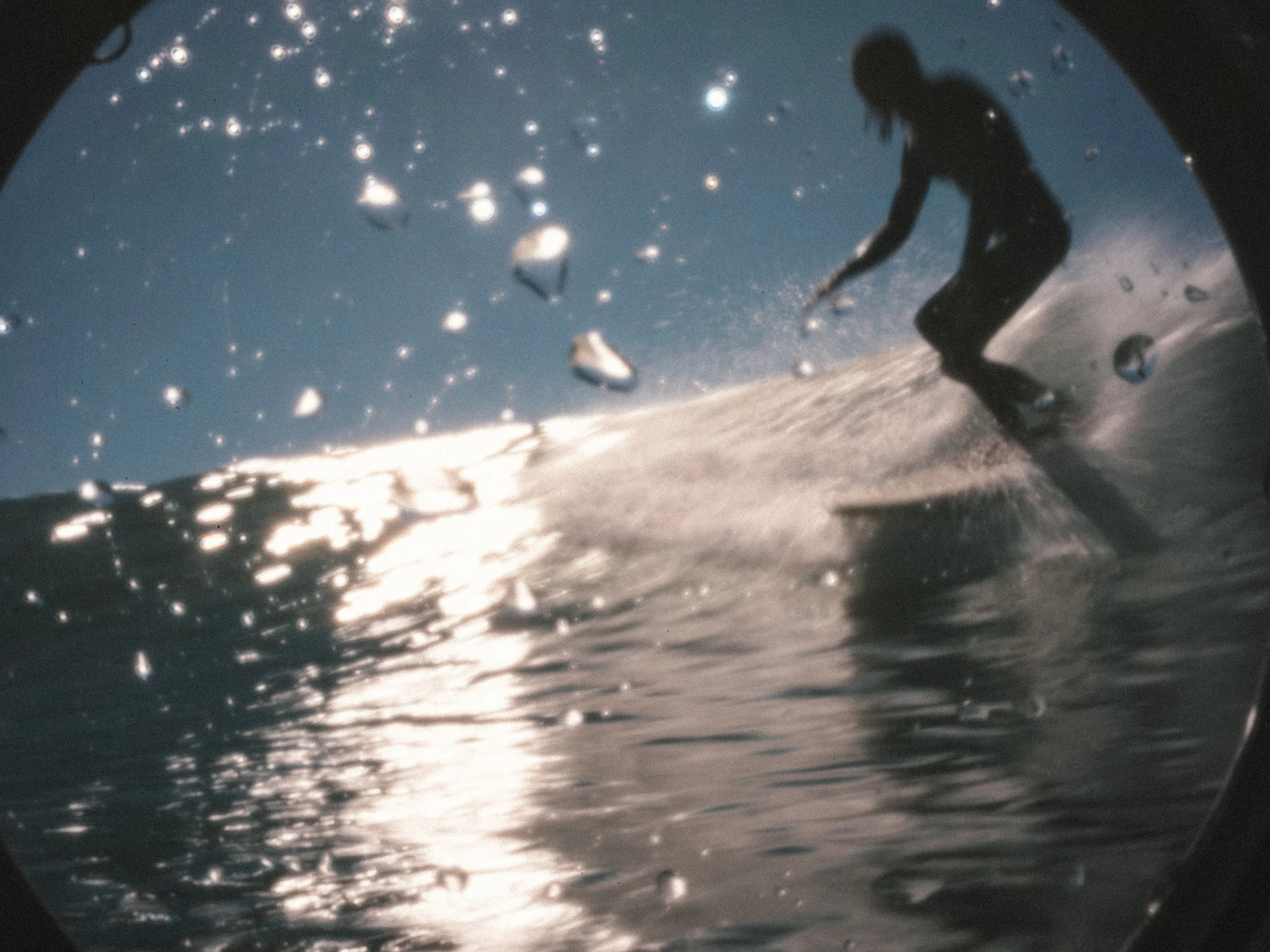
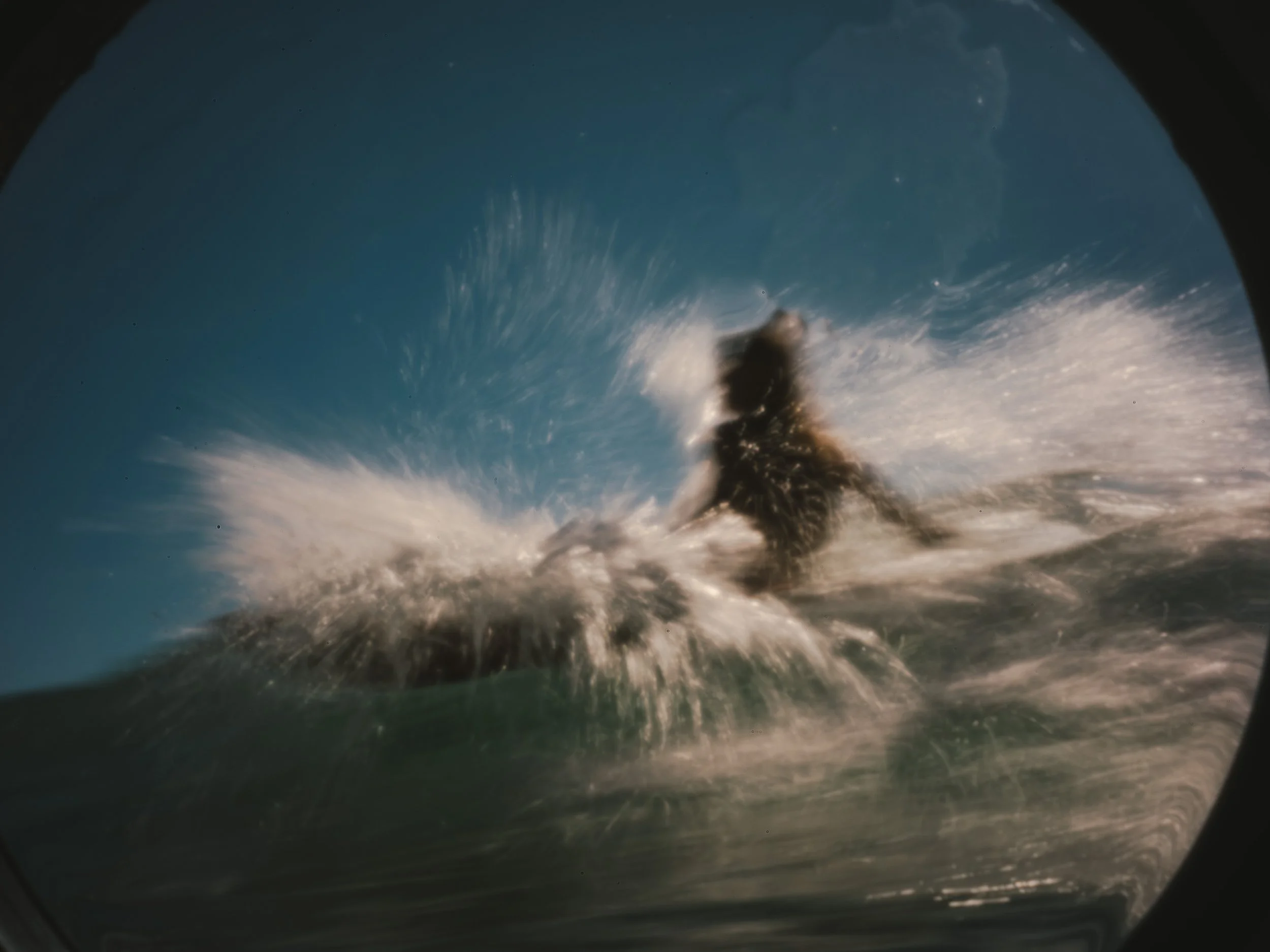
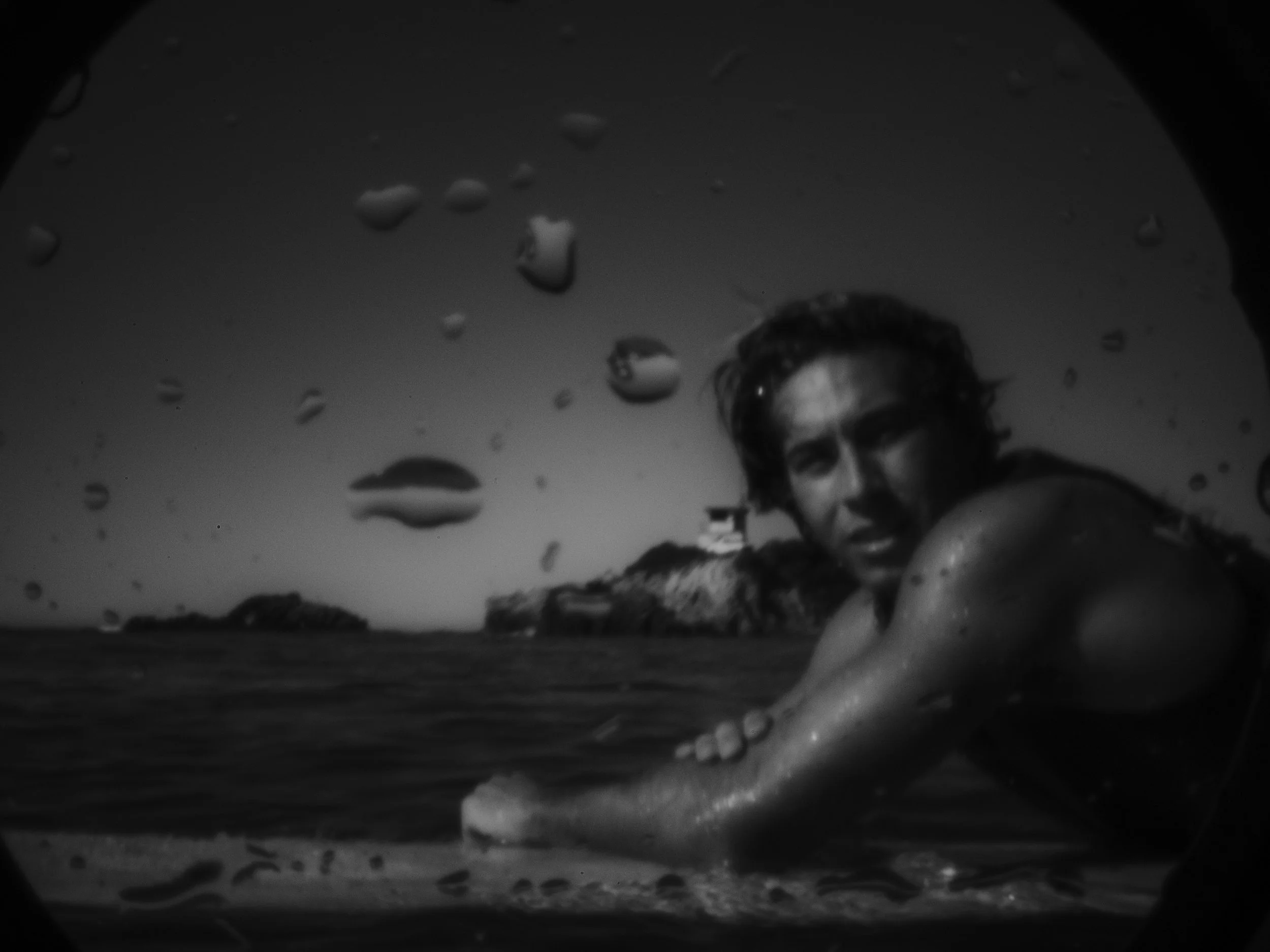
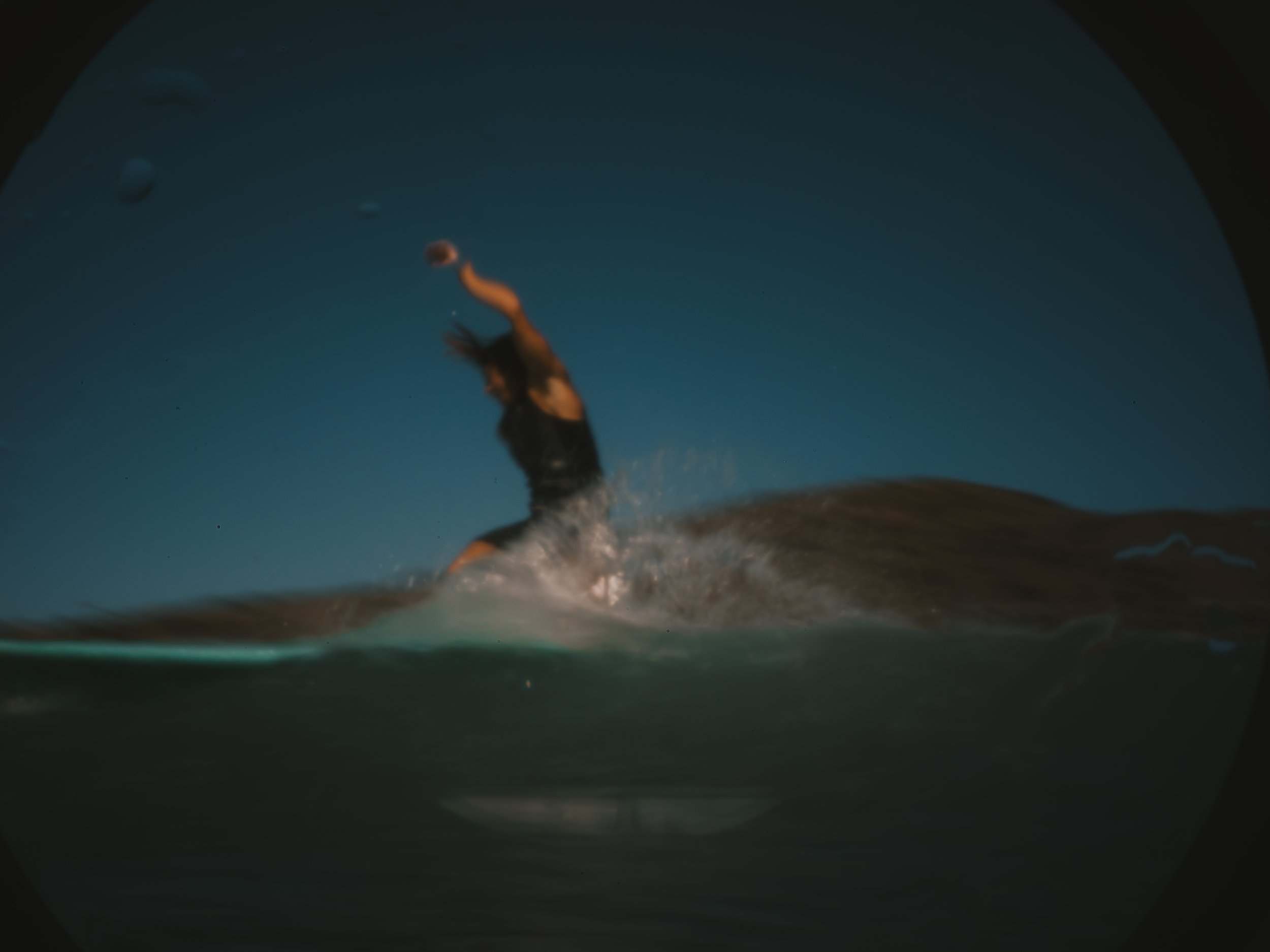
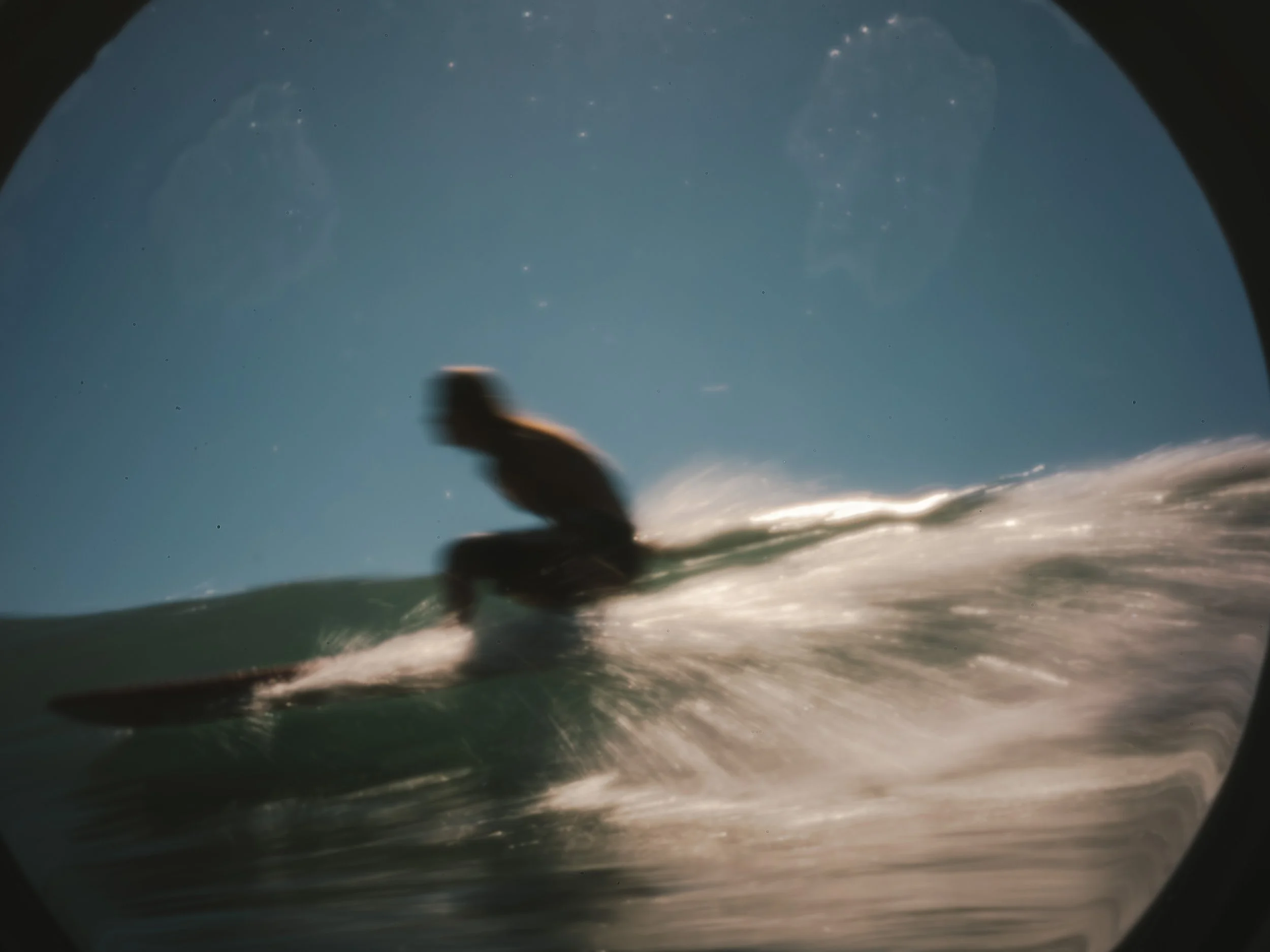
Pinhole Surf Photography
What is pinhole photography, and why should it not be used for taking surf photos?
To keep it short and sweet, pinhole photography is the process of capturing an image without a lens. Instead, light passes through a tiny aperture—sometimes no wider than the tip of a needle—and projects an image onto film or a digital sensor. Because the opening is so small, pinhole photography requires long exposure times and a stable surface or tripod to keep the camera still.
Part of what makes pinhole photography so unique is its unpredictability. There is no viewfinder and no lens to look through, so the photographer never knows exactly what the final image will look like. That uncertainty is also part of the fun. Pinhole photographs often have an atmospheric, soft, almost dreamlike quality that is difficult to recreate with a conventional camera. The necessary long exposures can turn even a seemingly still scene into something full of movement and time.
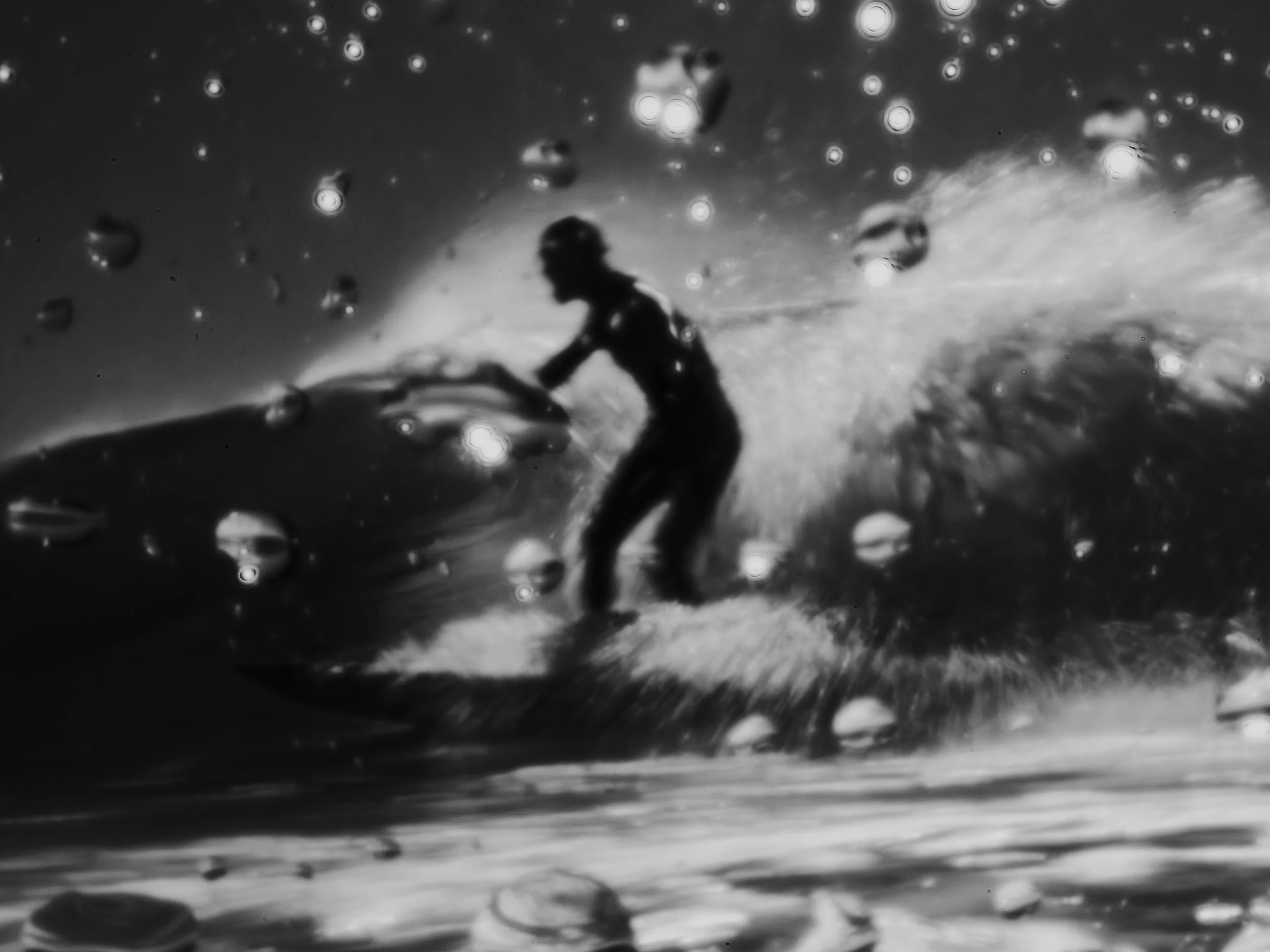
Untitled
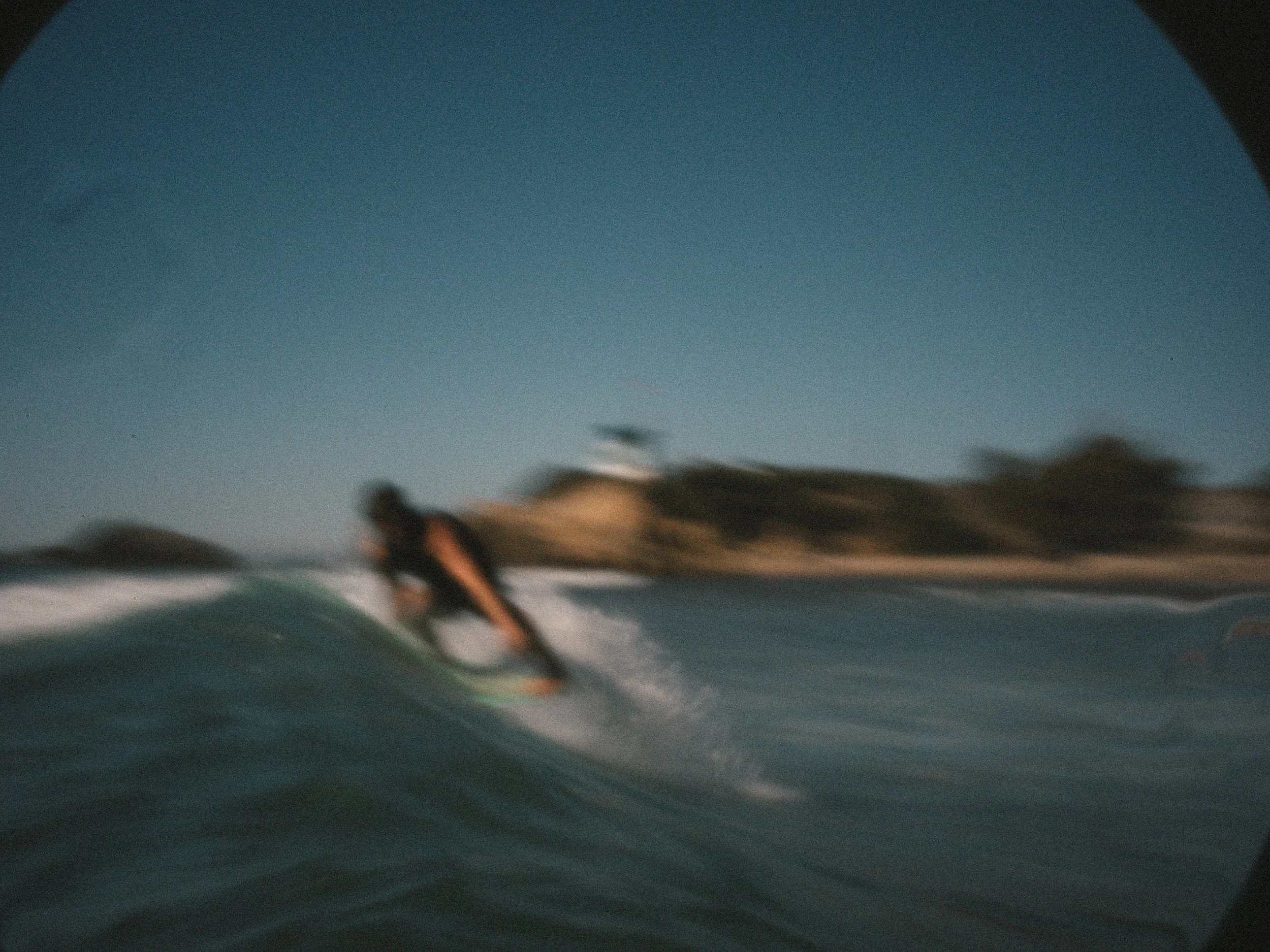
Canon 5d Mark IV/ ISO 800/ 1/20th sec/
Raleigh Mendez all rights reserved 2026
Why pinhole photography should not be used for surf photography.
Surfing is an extremely fast-paced sport, and surf photography traditionally requires an ultra-fast shutter speed—often 1/1000th of a second or faster—to produce tack-sharp images. If you’re shooting from the water, faster is usually better. The ocean is turbulent, surfers move quickly, and we humans aren’t exactly stable while floating around in the water.
In theory, pinhole photography should not work whatsoever for surf photography. As mentioned above, the technique needs ample light, stability, and a relatively stationary subject. None of those things are guaranteed when you’re swimming around in the ocean trying to photograph surfing.
But I must admit, I’m a bit devious when it comes to photography, and I love breaking the rules.
Around six or seven years ago, I purchased a pinhole lens with the intention of shooting landscapes. I never did. It eventually found its way to the back of one of my camera drawers, where it sat mostly forgotten.
Lately, I had been in a rut with my photography and felt like I needed to experiment with something completely different. Then I found that pinhole lens again. Almost immediately, I felt that rush of excitement that comes with a ridiculous photographic idea: What if this actually works?
Since it was October, the timing felt perfect. I started imagining something macabre—dark, dreamy, distorted images created in this strange underwater world. So I went to the beach. I wasn’t expecting much, but I was hopeful that the idea I had in my head might actually translate into a photograph.
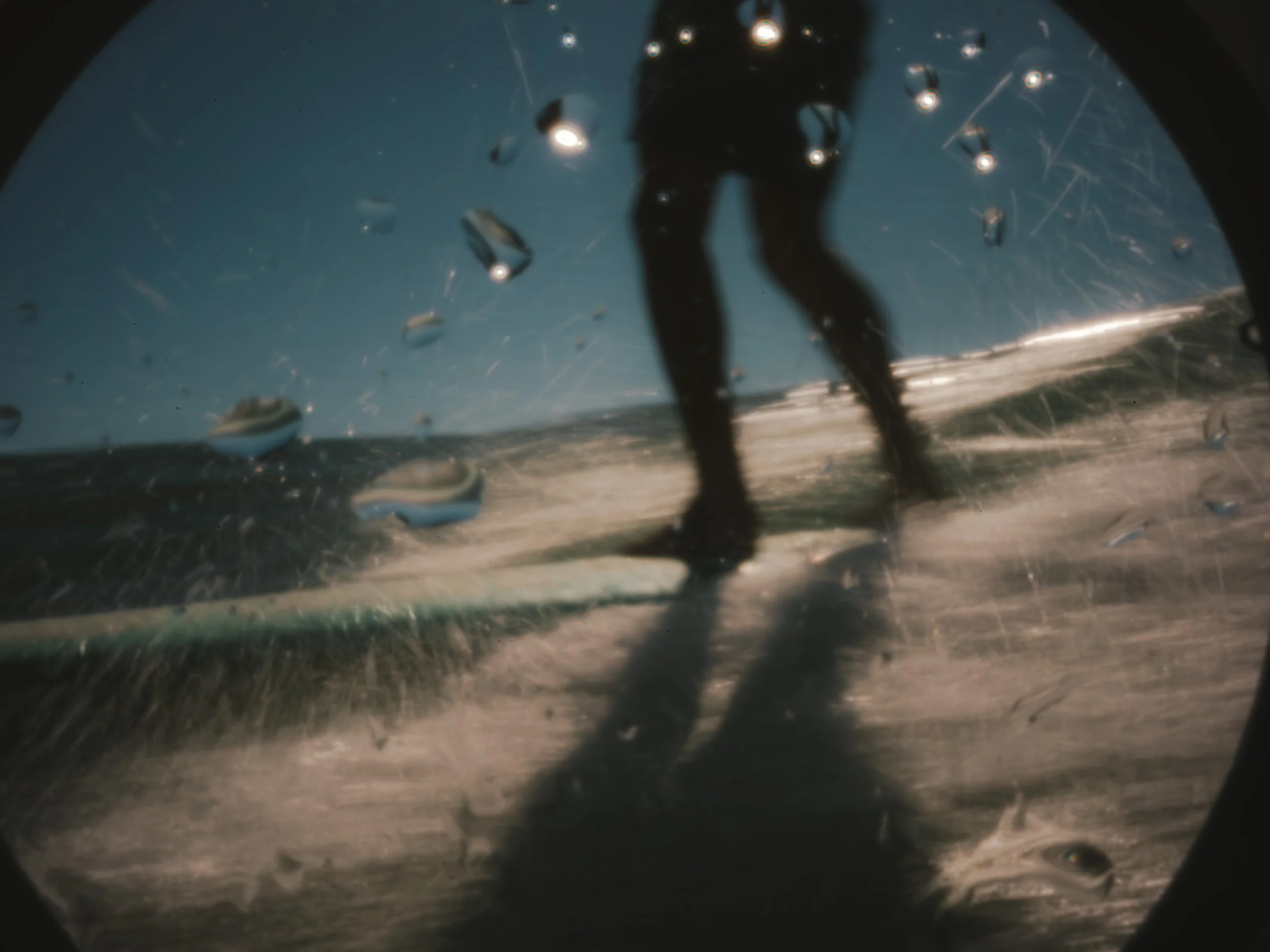
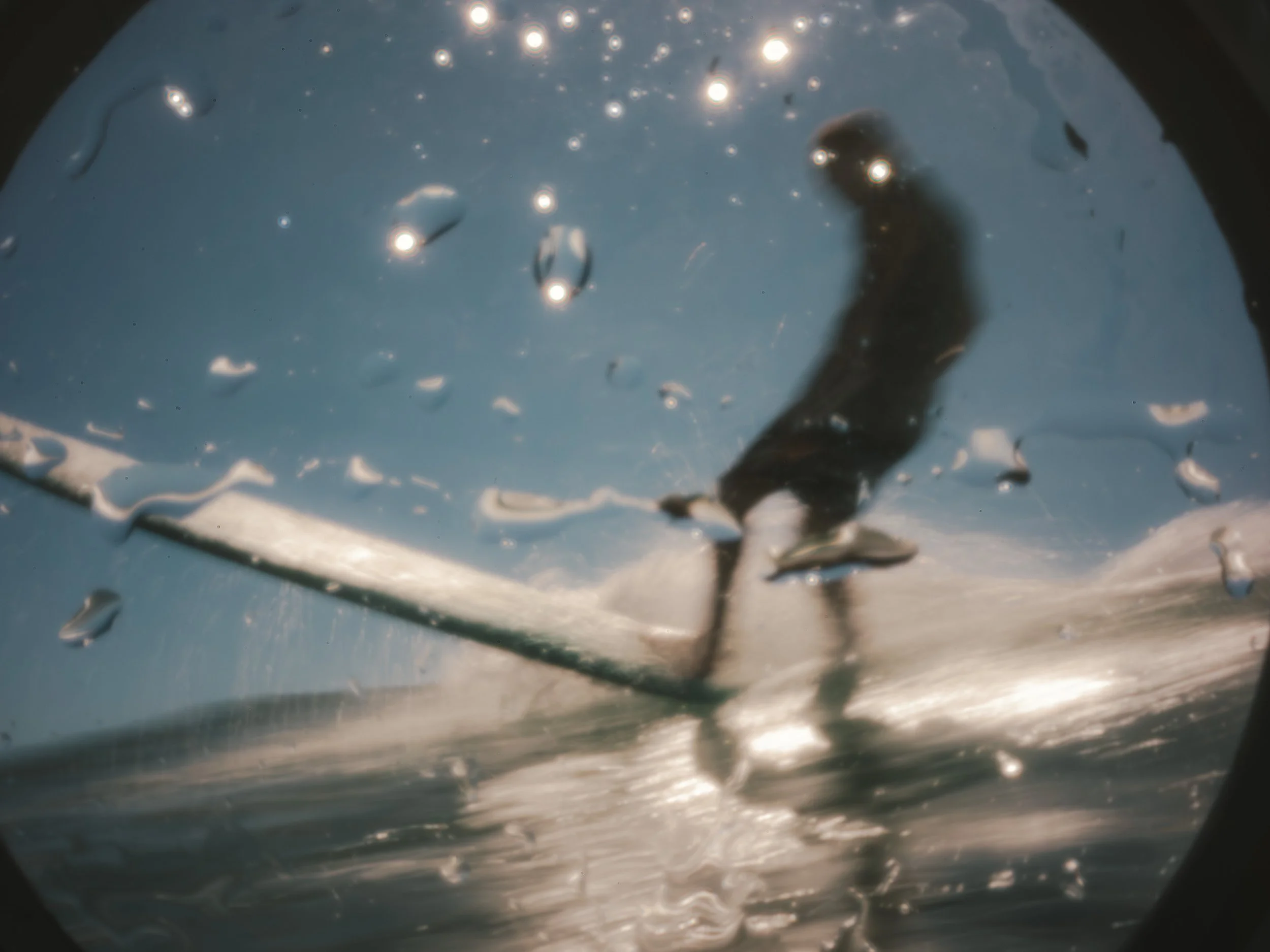
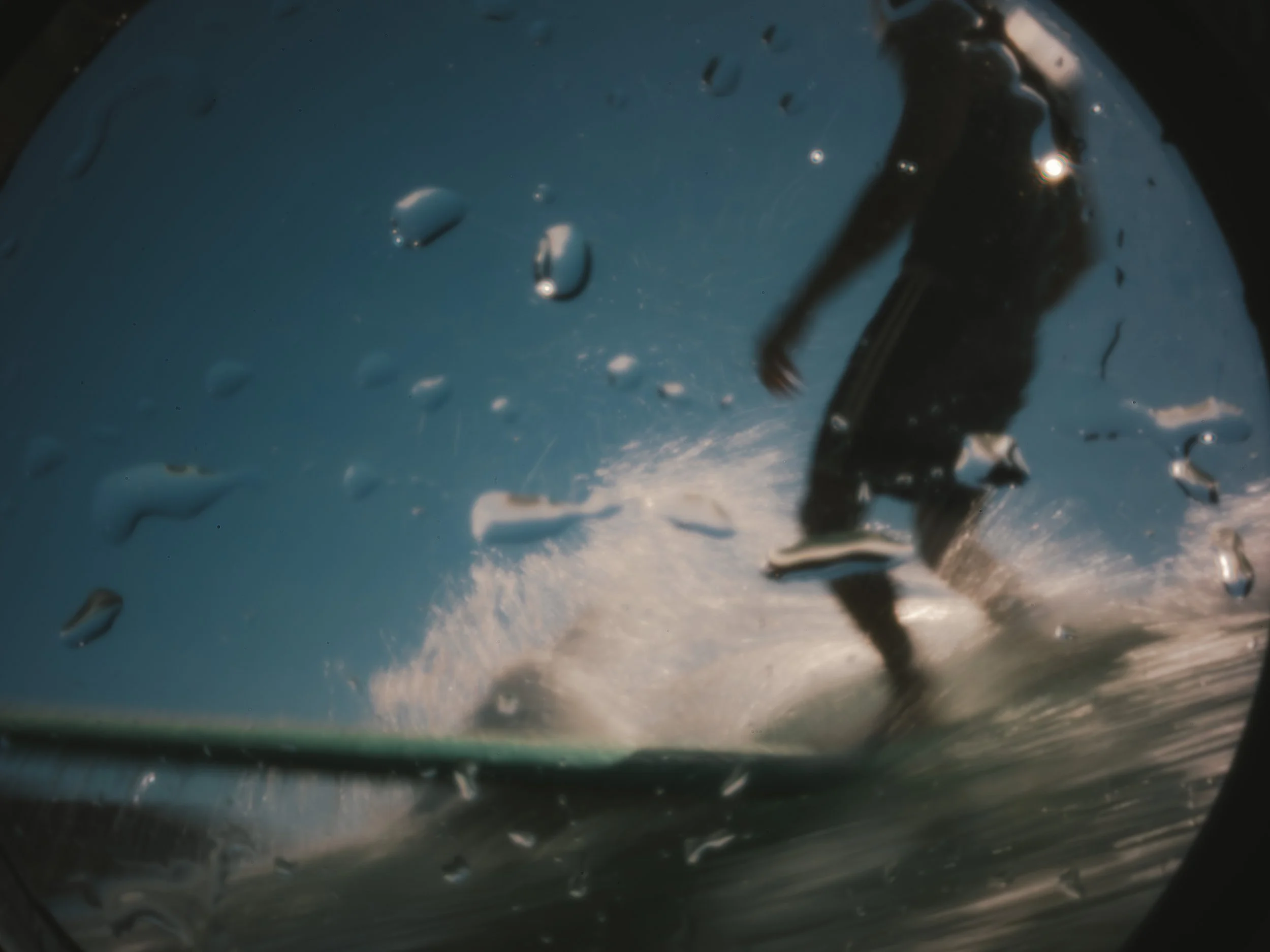
As I started shooting, I was completely comfortable with the possibility that none of the photographs would turn out. In a way, that was the point. I wasn’t trying to create technically perfect surf photographs. I wanted to see what would happen when I used a photographic process completely unsuited for the environment I was putting it in.
I’ll let the rest of the gallery do the talking. Hopefully, it inspires you to try something that shouldn’t work.